
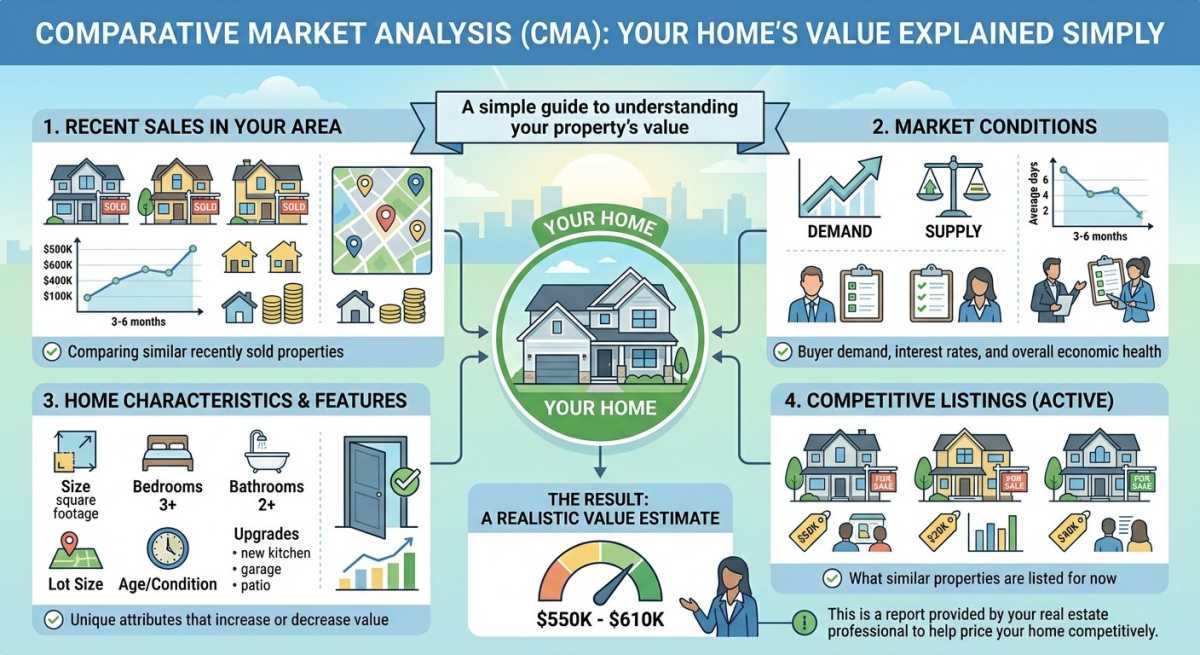
Setting the right price is both an art and a science. It requires analyzing comparable properties, understanding current market conditions, and evaluating your home’s unique features to determine a competitive asking price.
The right price should help you:
- Attract serious, qualified buyers
- Maximize your potential sale proceeds
- Sell within a reasonable timeframe
Price is one of the most important factors buyers consider when deciding which homes to view. While you determine your asking price, the market ultimately determines what buyers are willing to pay. It’s natural to feel emotionally attached to your home, but setting an unrealistic price can discourage buyers, delay the sale, and potentially lead to price reductions.
Why Proper Pricing Matters
A well-priced home can help you:
- Sell more efficiently with fewer unnecessary delays and inconveniences
- Reach more potential buyers by appealing to a broader audience
- Generate greater interest from real estate agents and prospective buyers
- Increase inquiries from online advertising and property signage
- Encourage competitive offers that may improve your negotiating position
- Maximize your potential net proceeds by positioning your home competitively
- Avoid becoming stale on the market, which can lead buyers to question the price or condition
| Sell your home fast & easy in any shape. Get Cash Fast! No pressure, no obligations. Contact Jorge Romero Today at 312-544-9022. |
How Does Your Home Compare?
Ultimately, buyers evaluate your home against similar properties currently for sale and those that have recently sold in your neighborhood. They compare prices, condition, features, location, and overall value before deciding which properties deserve their attention.
The goal is to price your home strategically from the start—at a level that attracts buyer interest, encourages showings, and positions you for the strongest possible offer based on current market conditions.
A useful next step would be to add a call to action inviting homeowners to request a free Comparative Market Analysis (CMA) to help determine a competitive asking price for their property.
Common Reasons Homeowners Overprice Their Homes
Setting an asking price can be challenging, especially when personal expectations influence the decision. Some common reasons sellers price their homes above market value include:
- Over-improvements: Assuming renovations and upgrades will add more value than buyers are willing to pay.
- Financial needs: Setting the price based on the amount needed to pay off a mortgage or cover other expenses.
- Purchasing in a higher-priced area: Expecting the home to command a similar price to properties in a more expensive neighborhood.
- High original purchase price: Believing the home must sell for more than the amount originally paid.
- Insufficient market data: Pricing without reviewing comparable sales and current competition.
- Leaving room to negotiate: Starting high with the expectation that buyers will make lower offers.
- Lack of urgency: Overpricing because there is no immediate need to sell.
- Assessed value: Assuming the property tax assessment reflects its current market value.
- Emotional attachment: Allowing sentimental value to influence the asking price.
- Outside opinions: Relying too heavily on estimates from family members, friends, or neighbors rather than market evidence.
The Risks of Overpricing Your Home
An asking price that exceeds market expectations can affect buyer interest, the time it takes to sell, and your eventual net proceeds.
-
- Missing the initial window of interest: A new listing often receives significant attention during its first few weeks on the market. Competitive pricing can help generate early showings and encourage buyers to act.
- Losing motivated buyers: Buyers who have been searching for the right home may overlook an overpriced property, even if it meets their needs.
- Needing repeated price reductions: Starting too high and planning to lower the price later can cause you to miss early opportunities when buyer interest is strongest.
- Facing appraisal challenges: If the agreed purchase price exceeds the appraised value, financing complications may arise, potentially delaying or jeopardizing the transaction.
- Being overlooked: Even an attractive, well-maintained home may receive fewer showings if its price is significantly higher than comparable properties.
- Developing a stale listing: Extended time on the market can lead buyers and agents to question whether the property is overpriced or has other issues.
- Attracting the wrong audience: An unrealistic price may appeal to buyers whose expectations or financial qualifications do not align with the property.
- Reducing the pool of qualified buyers: A higher asking price can place your home outside the search range of potential buyers.
- Helping competing listings sell: Buyers may choose similar homes that offer better perceived value.
- Increasing carrying costs: A longer selling period can mean additional mortgage payments, property taxes, insurance, utilities, and maintenance expenses.
| Sell your home fast & easy in any shape. Get Cash Fast! No pressure, no obligations. Contact Jorge Romero Today at 312-544-9022.
|